
What Is Digital Marketing? A Complete Guide for Beginners
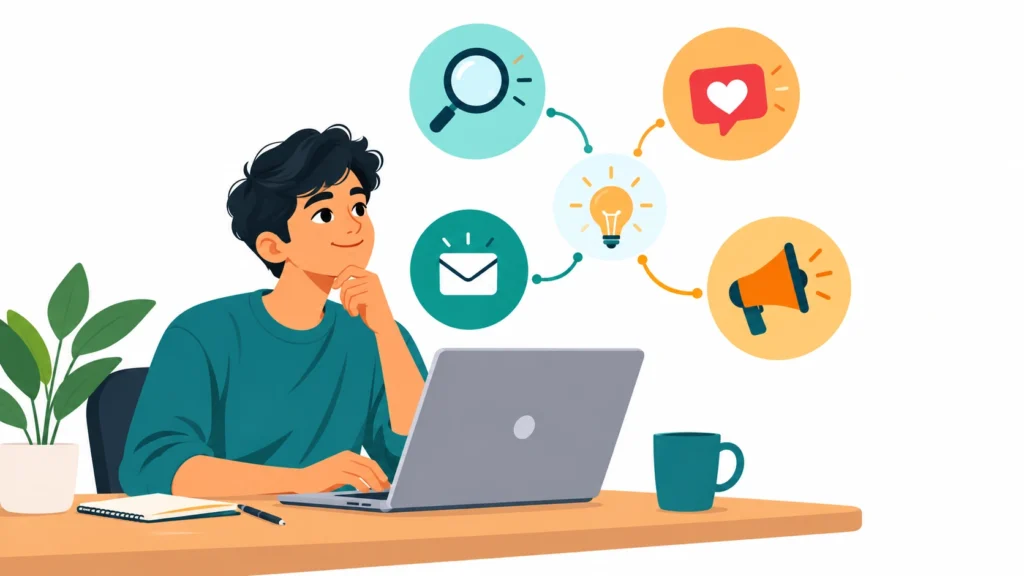
Digital marketing is one of those terms everyone uses but few people explain clearly. If you’re a beginner — whether you’re a business owner, a student, or someone thinking about a career in marketing — this guide will walk you through everything you need to know, from the basics to how it all fits together.
What is Digital Marketing?
Digital marketing is the practice of promoting products, services, or a brand using digital channels — the internet, mobile apps, search engines, social media, and more — instead of traditional media like TV, print, or radio.
In simple terms: if you’re marketing to people through a screen, that’s digital marketing.
Why Digital Marketing Matters Today
- People spend hours daily on their phones — scrolling social media, searching Google, watching videos.
- It’s measurable — you can see exactly how many people saw your ad, clicked it, or bought because of it.
- It’s cost-effective — you can start with a small budget, unlike traditional advertising.
- It allows precise targeting — reaching the exact audience (age, location, interest) most likely to buy.
The Core Types of Digital Marketing
1. Search Engine Optimization (SEO)
The process of improving your website so it ranks higher on Google for relevant searches. SEO brings free, long-term traffic but takes time to show results.
2. Search Engine Marketing (SEM) / Paid Ads
Paying to appear at the top of search results or on other platforms (Google Ads, Facebook Ads). Faster results than SEO, but costs stop when your budget does.
3. Social Media Marketing
Using platforms like Instagram, Facebook, LinkedIn, and YouTube to build brand awareness, engage audiences, and drive traffic or sales.
4. Content Marketing
Creating valuable content — blogs, videos, guides, infographics — to attract and educate your audience, building trust over time.
5. Email Marketing
Sending targeted emails to nurture leads, share offers, or keep customers engaged. Still one of the highest ROI channels when done right.
6. Affiliate Marketing
Partnering with individuals or other businesses who promote your product for a commission on sales they generate.
7. Influencer Marketing
Collaborating with social media influencers to reach their audience and build credibility through association.
8. Local SEO / Google My Business
Optimizing your online presence to attract customers searching for businesses near them.
How Digital Marketing Works Together
These channels aren’t meant to be used in isolation. A typical customer journey might look like:
- Someone sees your Instagram post (Social Media)
- They search your brand name on Google and land on your blog (SEO/Content)
- They sign up for your newsletter (Email Marketing)
- A retargeting ad reminds them to complete a purchase (Paid Ads)
This is why most effective digital marketing strategies combine multiple channels rather than relying on just one.
Key Terms Every Beginner Should Know
- Impressions – Number of times your content was shown
- Click-Through Rate (CTR) – Percentage of people who clicked after seeing your content
- Conversion Rate – Percentage of people who took the desired action (purchase, signup, etc.)
- CPC (Cost Per Click) – What you pay each time someone clicks your ad
- ROI (Return on Investment) – The profit generated compared to what you spent
How to Start Learning Digital Marketing
- Pick one channel first — Don’t try to learn everything at once. Start with SEO or social media, whichever interests you more.
- Learn by doing — Start a blog, an Instagram page, or run a small ad campaign to apply what you learn.
- Use free resources — Google’s own courses (Google Digital Garage), YouTube tutorials, and official platform guides (Meta Blueprint, Google Skillshop) are great starting points.
- Track real campaigns — Even small, real-world practice teaches more than theory alone.
Common Beginner Mistakes to Avoid
- Trying to master every channel at once instead of focusing
- Ignoring data and analytics — decisions should be based on numbers, not guesses
- Expecting instant results, especially with SEO and content marketing
- Focusing only on vanity metrics (likes, followers) instead of real business outcomes (leads, sales)
Final Thoughts
Digital marketing might seem overwhelming with all its channels and jargon, but at its core, it’s simple: reaching the right people, in the right place, with the right message — and measuring what works.
Start with one channel, learn the fundamentals, and build from there. Every expert started exactly where you are now.